AI in Education: Key Benefits, Risks and the Future
Explore how AI is transforming education through personalised learning, smart tutoring, and automation — plus the real risks schools and educators must address.
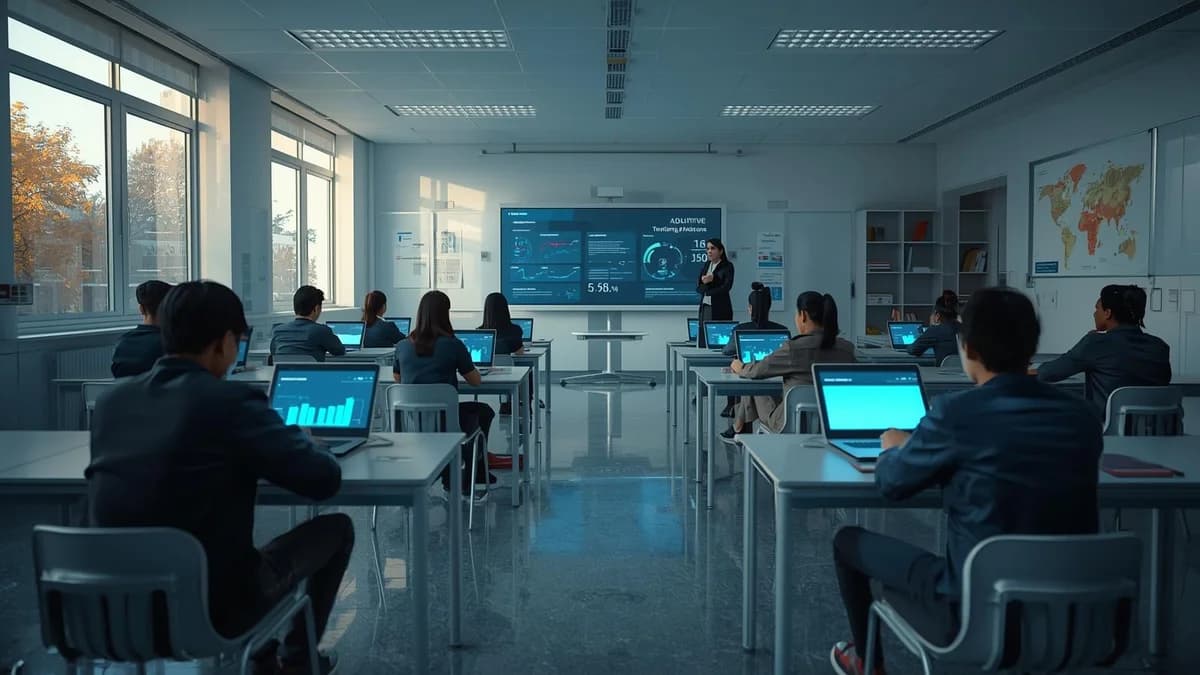
Artificial intelligence is no longer a distant concept reserved for tech labs and Silicon Valley boardrooms. It is inside classrooms, powering tutoring apps, grading essays, and shaping how millions of students learn every single day. However, this rapid shift raises important questions. What are the real benefits? What are the genuine risks? And how should educators, parents, and policymakers respond?
This article covers everything you need to know about AI in education — from its transformative potential to the ethical landmines that must not be ignored.
What Is AI in Education?
AI in education refers to the use of artificial intelligence technologies to support, enhance, or replace traditional learning methods. These technologies include machine learning, natural language processing, adaptive learning systems, and generative AI tools.
If you are unfamiliar with how these technologies differ, read our guide on AI vs Machine Learning vs Deep Learning for a clear breakdown. It is also worth understanding what generative AI is before diving deeper into its educational applications.
AI in education is not a single tool. It is an ecosystem. It includes platforms like Khan Academy's AI tutor, intelligent learning management systems (LMS), automated grading tools, virtual assistants, and language translation apps. Together, these tools are reshaping the entire learning journey — from kindergarten to postgraduate study.
The Global Scale of AI Adoption in Education
The scale of AI adoption in education is staggering. According to UNESCO's AI in Education programme, governments and institutions worldwide are investing heavily in AI-powered learning systems. UNESCO has called for human-centred approaches to AI in education, emphasising inclusion, equity, and the protection of learners.
The OECD's education research consistently shows that technology-enhanced learning can improve outcomes when implemented thoughtfully. However, outcomes vary widely based on access, training, and infrastructure.
The World Economic Forum projects that AI will fundamentally transform education systems by 2030. The shift is already underway. Over 60% of higher education institutions in developed countries now use some form of AI-powered tool in teaching or administration.
Key Benefits of AI in Education
1. Personalised Learning at Scale
One of AI's most powerful contributions to education is personalisation. Traditional classrooms teach all students at the same pace. AI breaks that model entirely.
Adaptive learning platforms like Duolingo, Century Tech, and Squirrel AI use machine learning algorithms to identify a student's strengths and weaknesses in real time. They then adjust content, difficulty, and pacing accordingly. A student who struggles with algebra gets more targeted practice. A student excelling in reading comprehension advances faster.
This level of individualisation was previously only possible with one-on-one tutoring. AI makes it available to millions simultaneously.
2. Intelligent Tutoring Systems
AI-powered tutoring systems can simulate a patient, knowledgeable tutor available 24 hours a day. These systems answer questions, explain concepts in multiple ways, and provide immediate feedback. Students no longer have to wait until the next class to clarify a misunderstood concept.
Tools like ChatGPT, Google Gemini, and Microsoft Copilot are increasingly used by students for homework help, essay structuring, and concept exploration. Our guide on the best AI tools for students in 2026 covers the top-rated options available today. If you are on a budget, also check our list of free AI tools that actually work.
3. Automated Grading and Feedback
Grading is one of the most time-consuming tasks for teachers. AI can grade multiple-choice tests, short answers, and even essays with reasonable accuracy. This frees educators to focus on mentoring, discussion, and deeper engagement.
Natural language processing (NLP) tools can analyse writing quality, check grammar, assess argument structure, and even detect plagiarism. Tools like Turnitin now incorporate AI layers to flag AI-generated content — a double-edged sword we will revisit later.
4. Accessibility and Inclusion
AI dramatically improves access for students with disabilities. Text-to-speech tools help visually impaired learners. Real-time captioning supports deaf students. AI translation services break down language barriers for non-native speakers.
Moreover, AI makes quality education more accessible in remote or underserved regions. A student in rural Nigeria or rural Bangladesh can access the same intelligent tutoring platform as a student in London or New York. This equity potential is one of AI's most compelling educational promises.
5. Administrative Efficiency
Schools and universities spend enormous resources on administration — scheduling, enrolment, reporting, and communications. AI automates many of these processes. Chatbots handle frequently asked questions from students and parents. AI systems manage timetables and flag at-risk students based on attendance and grade data.
This efficiency allows institutions to redirect human resources toward teaching and student welfare, where they matter most.
6. Data-Driven Insights for Educators
AI tools generate rich data about how students learn. Teachers gain visibility into which topics are causing confusion, how long students spend on tasks, and which teaching methods produce the best results. This insight allows evidence-based teaching improvements.
School administrators can identify systemic gaps. Policymakers can make more informed curriculum decisions. The result is a smarter, more responsive education system at every level.
7. Language Learning Revolution
AI has transformed language learning. Apps powered by AI — like Duolingo, Babbel, and Pimsleur — use speech recognition, spaced repetition, and adaptive quizzing to accelerate language acquisition. Learners get immediate pronunciation feedback and personalised vocabulary building.
For students learning English as a second language, AI tutors provide a low-pressure environment to practise speaking without fear of embarrassment. This psychological safety is a genuine pedagogical advantage.
8. Early Identification of Learning Difficulties
AI can detect signs of dyslexia, ADHD, and other learning difficulties earlier than traditional methods. By analysing patterns in reading speed, error types, writing structure, and task completion time, AI systems can flag students who may need specialist support.
Early intervention is critical. The sooner a learning difficulty is identified, the more effectively it can be addressed. AI acts as an always-on monitoring system that human teachers simply cannot replicate at scale.
Benefits Summary Table
Benefit | How AI Delivers It | Impact Level |
|---|---|---|
Personalised learning | Adaptive algorithms adjust content in real time | Very High |
Intelligent tutoring | 24/7 AI tutors explain and guide students | High |
Automated grading | NLP grades essays, tests, and assignments | High |
Accessibility | TTS, captioning, translation tools | Very High |
Administrative efficiency | Chatbots, scheduling, reporting automation | Medium |
Data-driven teaching | Learning analytics dashboards | High |
Language learning | Speech recognition, adaptive practice | High |
Early difficulty detection | Pattern recognition in learning data | Very High |
The Risks of AI in Education
AI's benefits are real. However, its risks are equally real and must be addressed with urgency. Rushing AI into classrooms without proper safeguards creates serious problems.
1. Academic Integrity and Cheating
The rise of generative AI tools has sparked a global academic integrity crisis. Students can now generate entire essays, research papers, and assignments in seconds. Universities and schools are struggling to keep up.
The Brookings Institution has documented how AI-generated content is blurring lines between original student work and machine output. Detection tools exist, but they are imperfect. False positives can unfairly penalise honest students. False negatives allow cheating to go undetected.
This challenge forces a fundamental rethink of how we assess learning. Rote assignments are becoming obsolete. Open-book, process-based, and practical assessments are gaining importance.
2. Data Privacy and Security
Educational AI systems collect vast amounts of data about students — age, location, performance, behaviour, and in some cases, biometric data. This creates significant privacy risks.
Children and young people are particularly vulnerable. If this data is mishandled, breached, or sold to third parties, the consequences can be severe. Our detailed guide on what is a data breach and how to prevent it explains the mechanics and risks involved.
Institutions must implement robust data governance frameworks. Parents must be informed about what data is collected and how it is used. Transparency is not optional — it is essential.
3. Algorithmic Bias
AI systems learn from historical data. If that data reflects existing inequalities — racial bias, gender bias, socioeconomic bias — the AI will reproduce and potentially amplify those inequalities.
For example, a facial recognition system used for attendance monitoring may perform less accurately for students of certain ethnicities. An automated grading system trained predominantly on English-language writing samples may unfairly penalise students who write in a different cultural register.
Edutopia has covered numerous cases where algorithmic bias in educational tools has led to inequitable outcomes. Bias audits, diverse training data, and ongoing monitoring are essential safeguards.
4. Over-Reliance and Skill Atrophy
When students rely heavily on AI for writing, calculations, and problem-solving, foundational cognitive skills may weaken. If a student always asks an AI chatbot for the answer, they may never develop the critical thinking, research, and reasoning skills that underpin deep learning.
There is a meaningful difference between using AI as a thinking partner and using it as a shortcut. Educators must design learning experiences that leverage AI as a scaffold — not a substitute for cognitive effort.
5. The Digital Divide
AI-powered education requires internet access, devices, and infrastructure. Globally, billions of students still lack reliable electricity, let alone broadband internet. In many low-income countries, the digital divide means AI in education benefits the already-privileged.
UNESCO has repeatedly highlighted this inequity. Without deliberate investment in digital infrastructure for underserved communities, AI in education risks widening the global learning gap rather than closing it.
6. Teacher Displacement Fears
Many educators fear that AI will make their roles redundant. While the data does not support mass teacher displacement, it does suggest that the nature of teaching will change significantly.
Teachers who embrace AI as a tool will be more effective. Teachers who resist adaptation may find their roles diminished. This creates urgency for professional development and continuous teacher training in AI literacy.
The human elements of teaching — empathy, mentorship, moral guidance, and interpersonal connection — cannot be replicated by any algorithm. However, the administrative and instructional components of the role will be increasingly augmented by AI.
7. Misinformation and Hallucinations
AI language models can confidently generate incorrect information — a phenomenon known as "hallucination." When students use AI tutors for research or fact-finding, they may receive plausible-sounding but entirely inaccurate responses.
This is a serious educational risk. Students who lack the critical literacy skills to verify AI-generated information may incorporate errors into their work and thinking. Understanding prompt engineering for beginners can help students interact with AI tools more effectively and reduce the risk of receiving misleading outputs.
8. Emotional and Social Development
Human interaction is fundamental to healthy child development. Over-exposure to AI-mediated learning environments at the expense of peer-to-peer and teacher-student interaction may impair social and emotional development.
Young children especially need the warmth, unpredictability, and social cues of human interaction to develop empathy, communication skills, and emotional regulation. AI supplements human education but cannot and must not replace it.
Risks Summary Table
Risk | Severity | Who Is Most Affected |
|---|---|---|
Academic dishonesty | High | Higher education, secondary schools |
Data privacy breaches | Very High | All students, especially minors |
Algorithmic bias | High | Marginalised and minority students |
Skill atrophy | Medium | All learners |
Digital divide | Very High | Students in developing regions |
Teacher displacement anxiety | Medium | Educators globally |
AI misinformation | High | Students without critical media skills |
Social/emotional impact | Medium | Young children, primary learners |
How AI Is Already Being Used in Real Classrooms
The theoretical benefits of AI in education are well documented. However, real-world implementation tells a more nuanced story.
In the United States, platforms like Khan Academy's Khanmigo (powered by GPT-4) provide personalised tutoring to millions of students. The tool guides students through problems with Socratic questioning rather than simply providing answers — a deliberate design choice to preserve critical thinking.
In China, companies like Squirrel AI (now Yixue Education) operate AI-powered learning centres across hundreds of cities. Their adaptive learning technology reportedly reduces the time needed to master subjects by up to 50% compared to traditional classroom instruction.
In the UK, schools are piloting AI tools for early literacy intervention. The National Literacy Trust and various EdTech companies are collaborating on AI tools that identify struggling readers in the first years of primary school.
In Africa, UNESCO-supported programmes are deploying offline-capable AI learning apps in regions without stable internet access. These initiatives aim to make adaptive learning technology available even in the most resource-constrained environments.
Understanding how AI works in different sectors is valuable context. Our article on how AI is used in cybersecurity with real-world cases shows how the same underlying AI technologies that power educational tools are being applied in entirely different high-stakes environments.
The Role of Generative AI in Education
Generative AI deserves its own discussion in the educational context. Tools like ChatGPT, Claude, Gemini, and Perplexity have changed how students research, write, and learn. Their impact has been immediate and disruptive.
On the positive side, generative AI gives every student access to an infinitely patient tutor capable of explaining complex topics in simple terms. It can summarise research papers, suggest essay structures, generate practice questions, and provide feedback on drafts in seconds. For students with learning difficulties, this accessibility is transformative.
On the negative side, generative AI makes it trivially easy to produce academic work without genuine intellectual engagement. This has forced a fundamental reassessment of assessment design across every level of education.
For a deeper understanding of the technology itself, read our beginner's guide to generative AI. If you are interested in how AI-powered chatbots are built, our step-by-step guide on how to build an AI chatbot is a valuable technical resource.
AI is also increasingly used for content creation beyond text. Tools like AI video generators are being used in education to create explainer videos and simulations. Our roundup of the top 10 AI video generators covers the leading platforms.
Ethical Frameworks for AI in Education
The ethical deployment of AI in education requires deliberate, structured governance. Several international frameworks are emerging to guide this work.
UNESCO's Recommendation on the Ethics of AI (2021) provides a global framework that emphasises human rights, transparency, accountability, and inclusion. It specifically calls for AI systems in education to be explainable and auditable.
The OECD Principles on AI emphasise that AI systems should be robust, safe, and fair — and that their outcomes should benefit people and the planet. Their education research portal is an essential resource for policymakers.
The World Economic Forum has published extensively on responsible AI deployment across sectors, including education. Their framework emphasises multi-stakeholder governance involving educators, technologists, students, and civil society.
In the United States, the regulatory environment is evolving rapidly. Our coverage of Trump's executive order blocking state AI laws provides important context on how federal AI policy is shaping the broader technology landscape, including education.
What Educators and Institutions Should Do Now
The question is no longer whether to integrate AI into education. It is how to do so responsibly. Here are practical steps for educators and institutions:
1. Develop a clear AI policy
Every school and university needs a written policy on AI use. This should cover acceptable use by students, data privacy standards, and consequences for misuse.
2. Train teachers in AI literacy
Educators cannot guide students on AI tools they do not understand themselves. Professional development in AI literacy is not optional — it is urgent. Teachers should understand how these tools work, their limitations, and their pedagogical applications.
3. Redesign assessments
Move away from take-home essays and toward in-class demonstrations, oral examinations, project-based assessments, and portfolio work. These formats are harder to fake with AI and better assess genuine understanding.
4. Teach students to use AI critically
AI literacy should be embedded in curricula from secondary school onward. Students should learn to prompt AI effectively, verify AI outputs, and understand the limitations of these systems. Our guide on prompt engineering for beginners is an excellent starting point for both educators and students.
5. Prioritise data protection
Before deploying any AI tool, institutions should conduct data privacy impact assessments. Tools that collect sensitive student data must comply with applicable regulations — GDPR in Europe, FERPA in the United States, and equivalent frameworks globally. Read our guide on zero trust security for a deeper understanding of modern data protection principles.
6. Address the digital divide actively
Institutions in resource-rich environments should advocate for broader access. Technology partnerships, government investment, and community programmes are needed to ensure AI-powered learning reaches all students, not just the privileged.
The Future of AI in Education
The trajectory of AI in education points toward increasingly immersive and personalised experiences. Several developments are on the horizon.
AI-powered virtual classrooms will simulate immersive environments where students can explore historical events, conduct science experiments in virtual labs, or practise foreign languages with AI conversation partners that simulate real cultural interactions.
Emotion recognition technology may allow AI systems to detect when a student is confused, frustrated, or disengaged, and adjust the learning experience accordingly. However, this technology raises profound privacy and consent questions that must be resolved before widespread deployment.
Hyper-personalised curriculum planning will use long-term learning data to build individualised educational pathways for each student — mapping their strengths, interests, and career goals into a dynamic, evolving curriculum.
AI teaching assistants will work alongside human teachers, handling routine instruction and freeing educators to focus on complex mentoring, socialisation, and the uniquely human dimensions of teaching.
The rise of agentic AI — AI systems capable of completing multi-step tasks autonomously — will further transform education. Our analysis of the rise of agentic AI and autonomous workflows provides important context on where this technology is heading.
Furthermore, as AI tools become more capable, understanding how they are built becomes increasingly valuable. Our guide on AI app development for modern developers is relevant for those who want to build educational AI solutions themselves.
AI in Education vs Traditional Education: A Comparison
Dimension | Traditional Education | AI-Enhanced Education |
|---|---|---|
Pacing | Fixed, class-wide | Personalised to each student |
Feedback | Delayed (days to weeks) | Immediate |
Availability | Classroom hours only | 24/7 via AI tools |
Assessment | Standardised tests, essays | Adaptive, multimodal |
Teacher role | Primary knowledge deliverer | Mentor and facilitator |
Accessibility | Limited by geography/resources | Potentially global |
Data use | Minimal, informal | Rich analytics and insights |
Equity | Dependent on local resources | Can democratise access |
Balancing Innovation with Responsibility
AI in education offers extraordinary promise. It can personalise learning, democratise access, support teachers, and identify struggling students earlier than ever before. These are not small improvements — they represent a potential revolution in how humanity transmits knowledge across generations.
However, the risks are real and serious. Academic dishonesty, data privacy violations, algorithmic bias, and the digital divide must be addressed head-on. The Brookings Institution has consistently argued that AI governance must be proactive, not reactive. Waiting for problems to manifest before creating safeguards is not acceptable when children's education and data are involved.
Edutopia regularly publishes evidence-based strategies for integrating technology into education responsibly. Their research-backed approach provides a model for how schools can embrace innovation without abandoning their duty of care to students.
The most important principle is this: AI should serve education, not drive it. Technology must be subordinate to pedagogy, and pedagogy must be subordinate to the human development of each child.
Also, as AI increasingly shapes how businesses operate, students who understand AI now have a distinct career advantage. Tools covered in our guide on the best AI tools for small business owners illustrate how AI skills are already essential in the workplace — reinforcing the case for AI literacy in education.
Final Thoughts
AI in education is not a future possibility. It is a present reality, actively reshaping how students learn and how teachers teach. The technology is powerful, the benefits are documented, and the risks are manageable — if addressed with rigour and intention.
Educators, policymakers, parents, and technology developers must work together. The goal is not the most technologically advanced classroom. The goal is the best-educated, most capable, and most ethically grounded generation of learners the world has ever produced.
AI is a tool. Used wisely, it is a remarkable one. The responsibility for using it wisely belongs to all of us.
Opeyemi
Stay Updated
Get the latest tech news delivered to your inbox every morning.
Comments coming soon